Threat model
Define the adversarial conditions the verification layer is expected to address.
 Strategic Access ↗
One trust architecture connects human identity, physical assets and enterprise systems — while keeping the protected mechanism out of public view.
Each layer solves a different part of the system: establishing a physical anchor, verifying it in context and translating the result into enterprise action.
The physical anchor is not one fixed object. These restrained concept studies explore how high-assurance presence could be worn, carried and presented without turning security into spectacle.
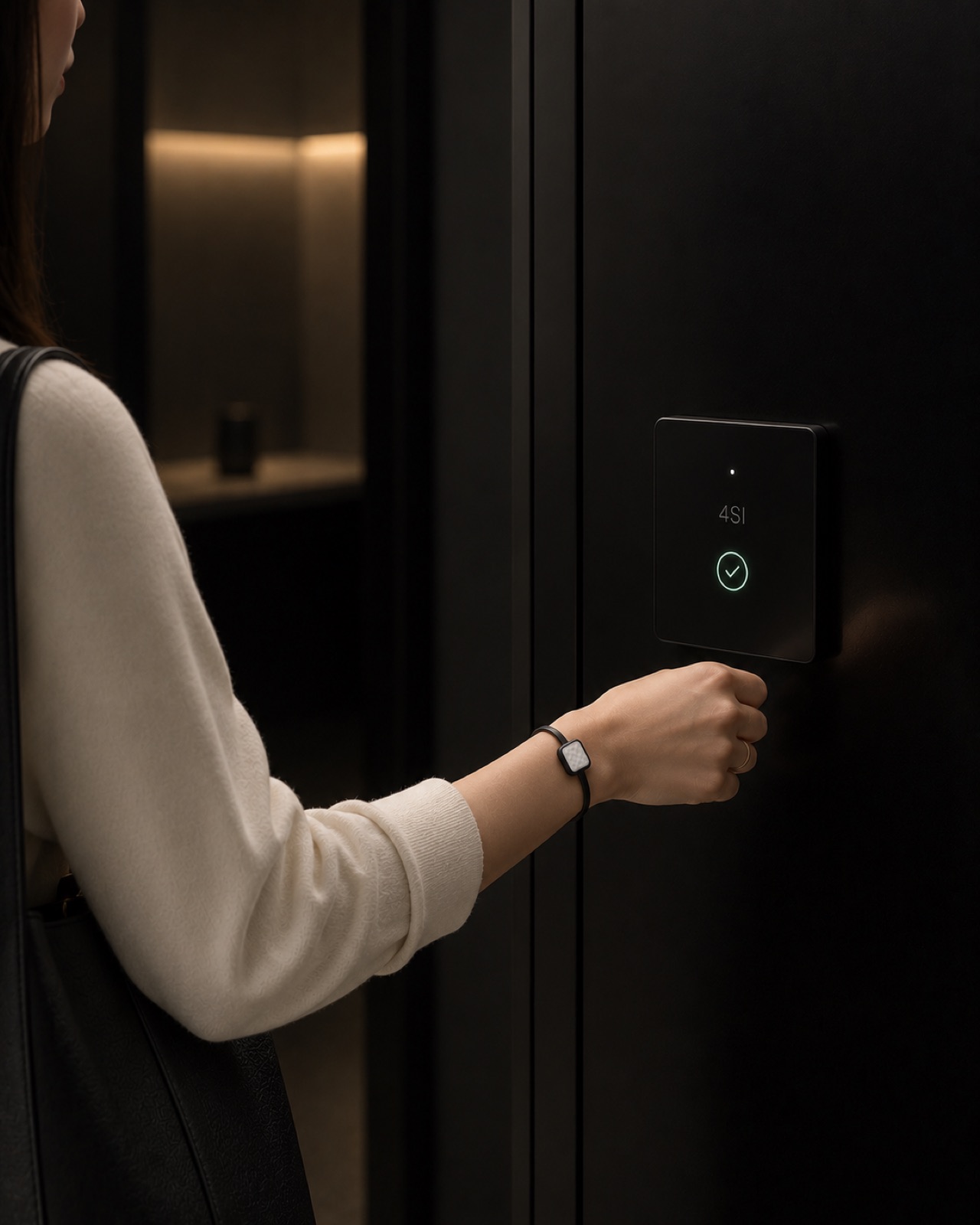



CONCEPT STUDIES / FORM FACTORS ARE ILLUSTRATIVE / PROTECTED MECHANISM NOT SHOWN
A high-assurance physical identity layer designed to connect the person authorizing an action to the expected digital identity.
Strengthen access to critical physical and digital environments.
Add physical-world trust to sensitive approvals and transactions.
Establish a trusted authorization point before systems act.
Designed to work with existing identity and policy infrastructure.
A scalable physical trust layer for products, components, documents and critical assets — creating a durable connection between the physical object and its digital record.
Support verification across manufacturing, distribution and use.
Help identify substitution or unauthorized replacement.
Connect physical checkpoints to existing traceability systems.
Maintain trust beyond a product's first point of sale.
The verification and integration environment that translates physical trust events into decisions, workflows and controls across enterprise infrastructure.
Configure how and when physical verification is requested.
Translate results into context-aware authorization decisions.
Manage trust relationships across people, objects and systems.
Connect through controlled interfaces to existing infrastructure.
A serious deployment defines what is being verified, under which conditions, which authority interprets the result and what downstream action is permitted.
Define the adversarial conditions the verification layer is expected to address.
Specify when physical proof is required and what level of assurance is appropriate.
Control how verification results enter identity, transaction or operational systems.
Govern enrollment, use, review and retirement across the trust relationship.
Detailed architecture and validation are available through a qualified process.
Request strategic access ↗