
Presence applications
Different industries.
One human layer.
The door. The account. The decision. Wherever a service needs to establish that a person is physically involved, we see a place for Presence.

Start with
the moment.
Which person needs to be present before this action proceeds?
Physical access
The right person.
At the right entrance.
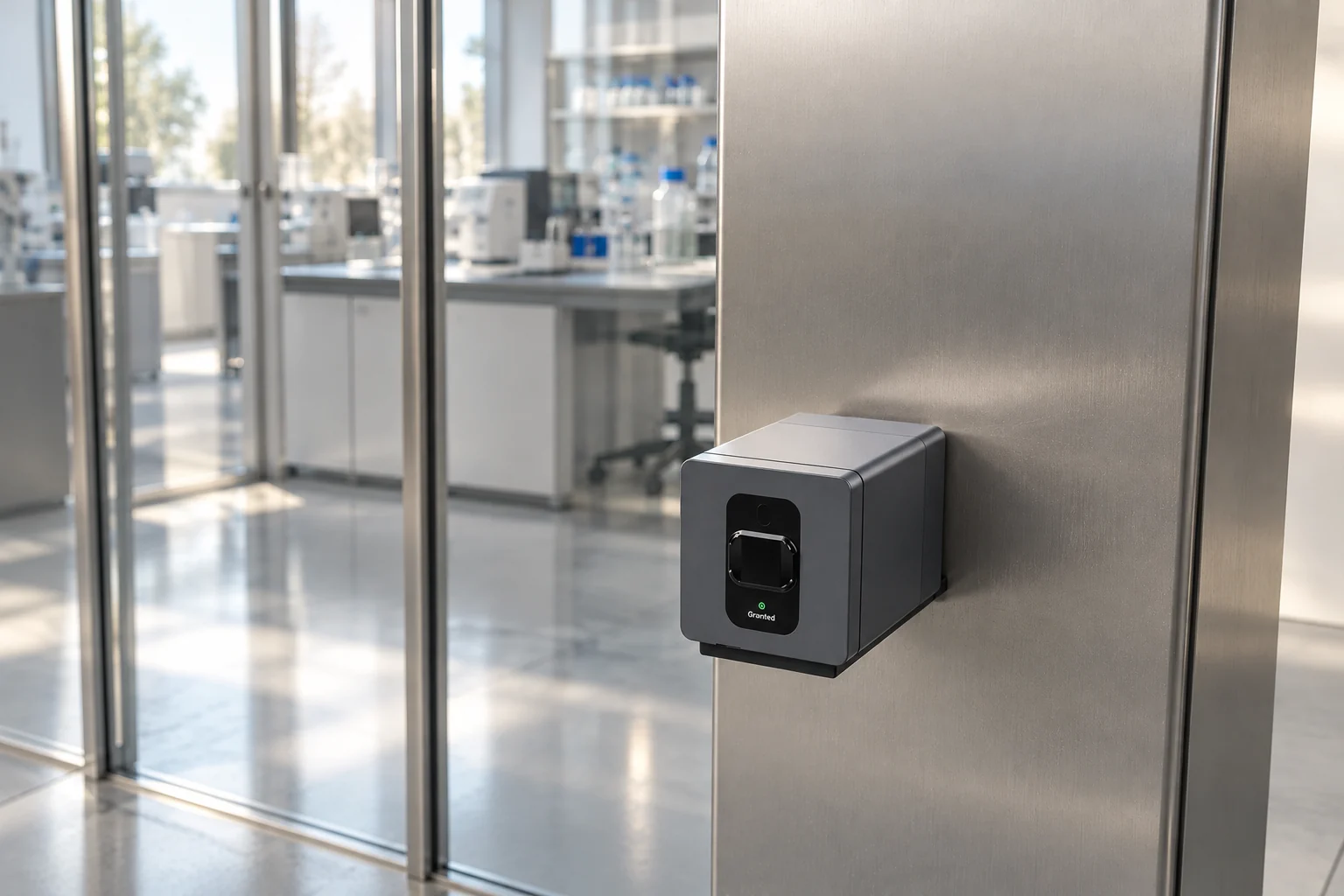
A technician arrives. A shift begins. A visitor reaches a restricted area. Connect permission to the person at that entrance, at that time.
Presence is being developed to add a personal Key check to the entry request. Your access controller applies the permission and controls the lock.
Offices · Laboratories · Homes · Critical facilities
What we would validate
Agree the controller interface, permission lifetime and revocation. Test the real entrance, throughput, accessibility, outages and independent emergency escape.
See the architecture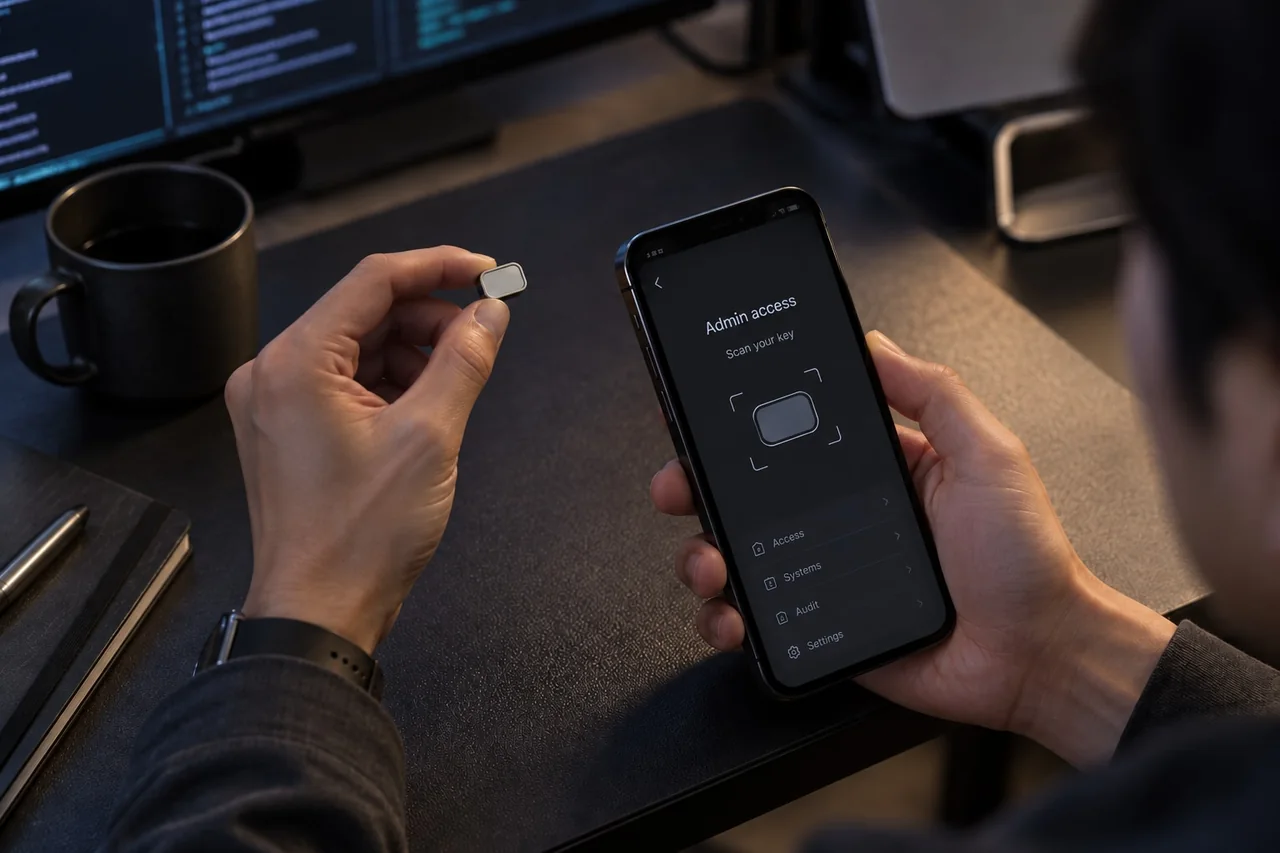
Digital access
Connect the account
to the person using it.
A member of staff opens a business application. An administrator requests elevated access. A customer recovers an account. Decide when a fresh physical check belongs in that journey.
Connect the application through the platform’s documented identity interfaces. Define how the intended Key check, session and permissions work together.
Workforce applications · Customer accounts · Privileged access
What we would validate
Evaluate enrolment, the sign-in and recovery paths, session revocation and access checks. Confirm the customer configuration and physical verification separately.
See the architecture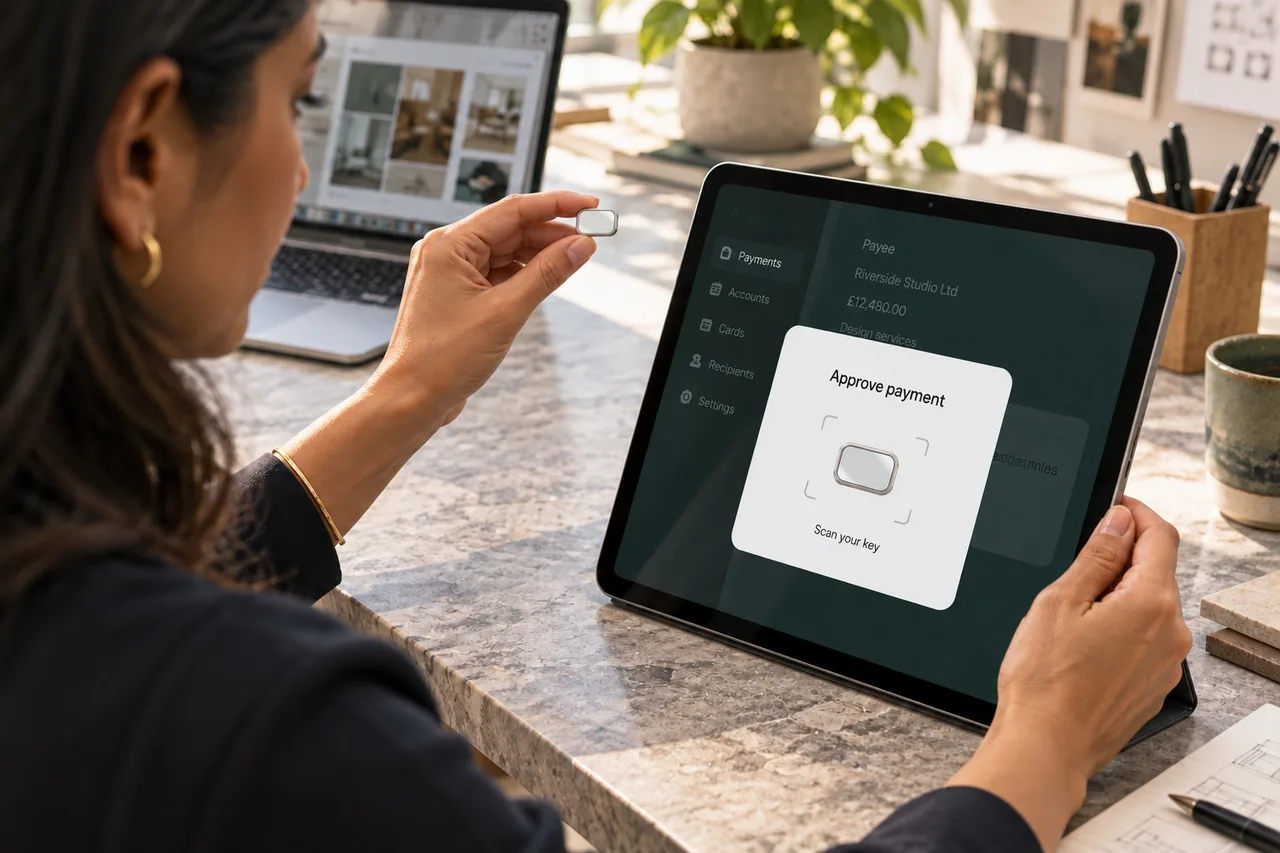
Payments and decisions
Before the commitment.
Confirm the person.
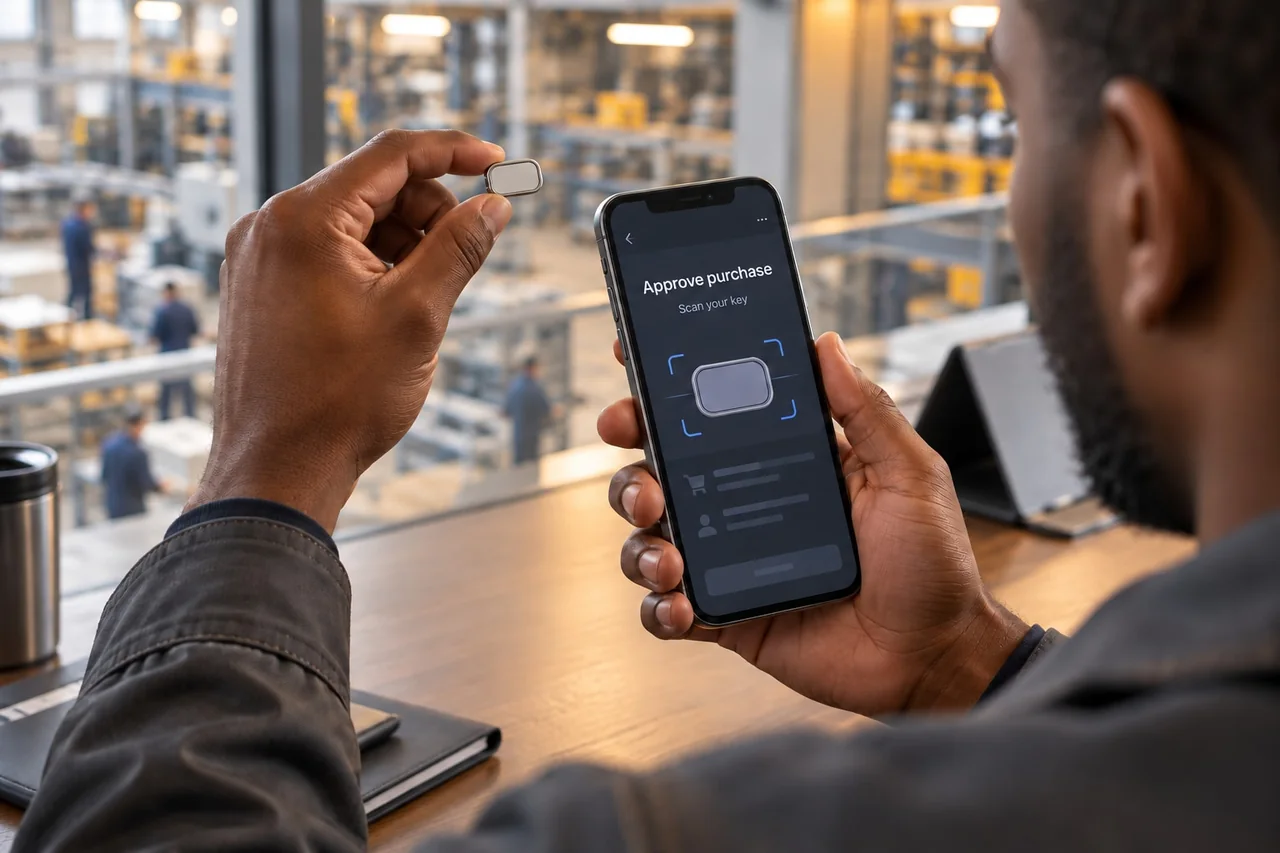
A payment is ready. A beneficiary changes. A purchase exceeds its limit. The next click commits your organisation. Make the required person part of that exact decision.
The intended Presence check connects the person’s confirmation to the request. Your service retains transaction limits, dual approval and the final decision.
Payments · Procurement · Account changes · Client instructions
What we would validate
Bind the check to the amount, recipient and action. Test expiry, replay, cancellation and recovery. Measure completion time as well as security.
See the architecture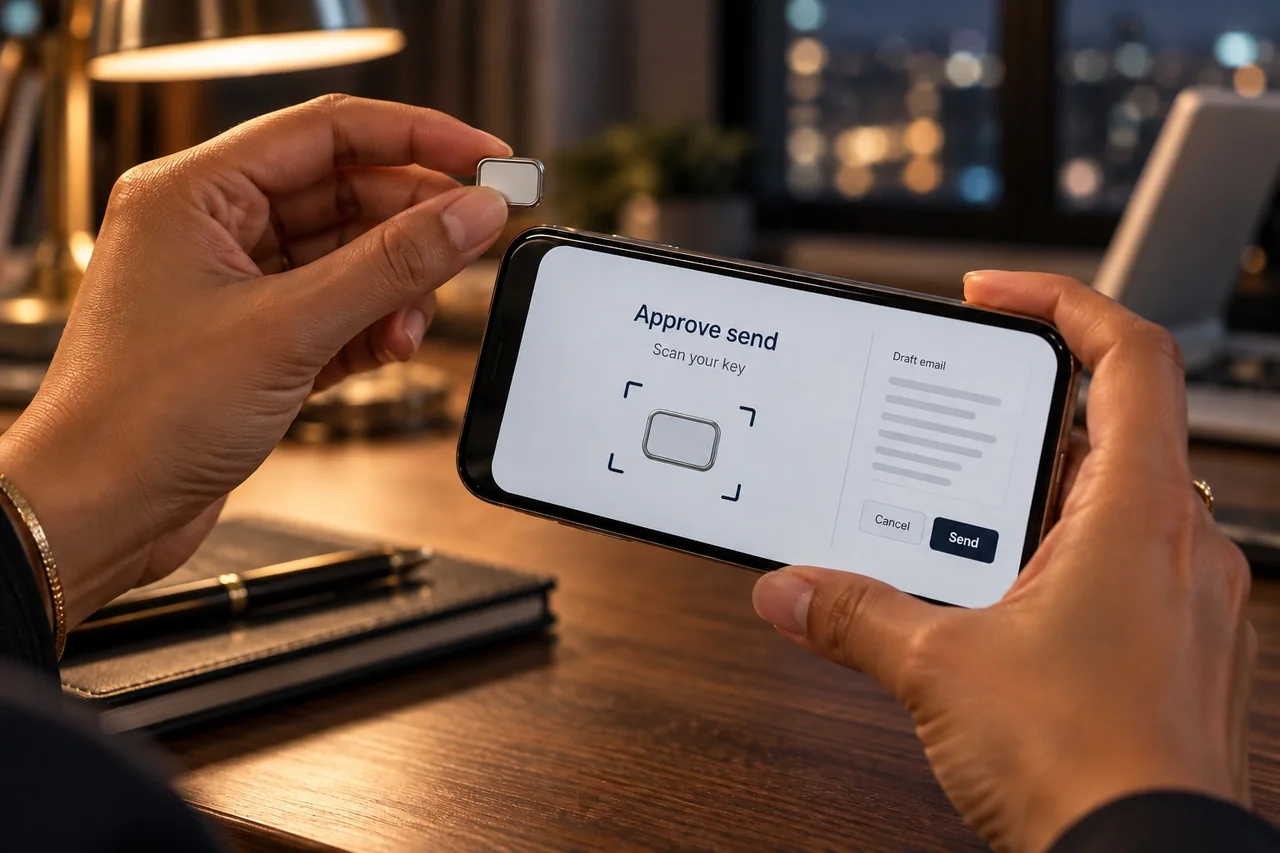
Human authority
Let software prepare.
Keep authority deliberate.
An agent can draft a message, prepare a purchase or propose a system change. Define the boundary where a named person must review and confirm before execution.
Use a proposed Presence check at that boundary. The executing system must enforce the approved action, its limits and a safe way to stop.
Agent workflows · System changes · External commitments
What we would validate
Test that the person understands the request and can refuse it. Keep human oversight, execution policy and monitoring in place: presence alone is not informed consent.
See the architecture
Services and handovers
A service is ready.
Who should receive it?
A rental begins. A room is released. Equipment changes hands. The service needs to connect its entitlement to the person receiving it.
Bring a person-specific check to the handover. Your service continues to establish eligibility, booking, payment and any required identity evidence.
Mobility · Hospitality · Equipment · Protected services
What we would validate
Define who may receive the service, delegated access and exceptions. A physical check does not establish age, legal identity or eligibility by itself.
See the architectureThese are intended applications. Physical verification and partner integration are validated for the specific workflow before deployment.
Every industry.
Its own starting point.
From a hospital entrance to a financial approval. Explore the people, decisions and operating responsibilities in your world.
For product teams and technology providers
Bring Presence
into your product.
Your application. Your device. Your customer experience. Explore how a Presence check can become part of what you already deliver.
Presence for your organisation
Start with one.
Build from what works.
Tell us where Presence could make a difference. Discuss fit, integration, availability and the commercial path—then scope a first evaluation around your users and systems.
Talk to salesA useful evaluation answers:
- What evidence does the process need?
- Can people complete it clearly and reliably?
- What happens on refusal, failure or loss of access?
- Does the result justify operating it at scale?